Post Handover Payment Plans in Dubai: How 1% a Month Actually Works
What a post handover payment plan really is, why developers offer them, how the arithmetic works in your favour and against it, and the clauses that decide whether one is a good deal.
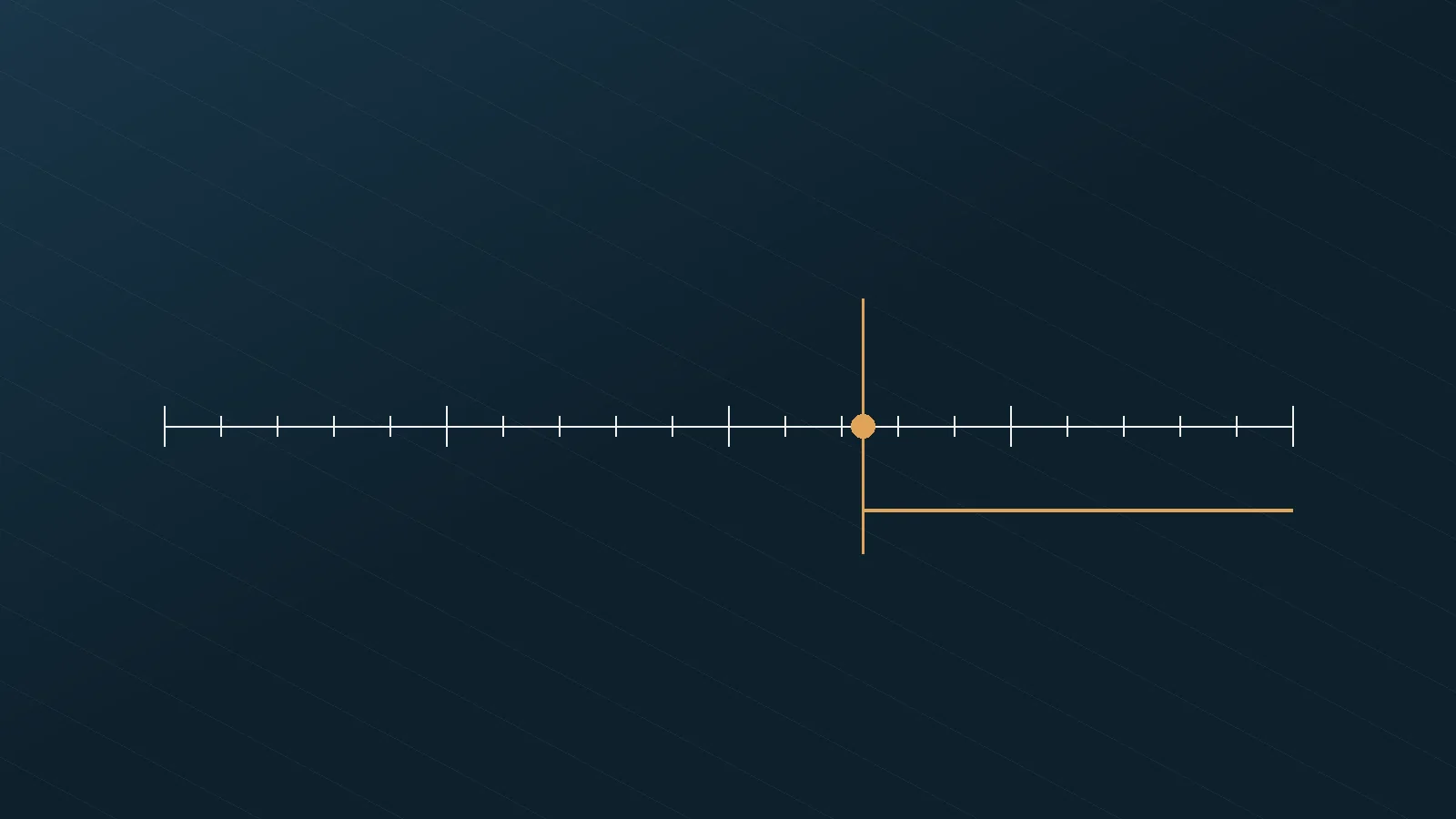
A post handover payment plan is a developer instalment schedule that keeps running after you have the keys. Instead of paying the full price by completion, you pay a deposit, a series of instalments during construction, and then continue paying monthly while you live in the property or let it out.
It is the dominant structure in Dubai’s off plan market, and it is the single biggest reason off plan accounts for more than half of all Dubai property transactions by count. It is also widely misunderstood, in both directions: oversold by agents as free money, and dismissed by sceptics as a trap. It is neither. It is a financing structure with a specific shape, and the shape rewards some buyers and punishes others.
What does a typical Dubai post handover plan look like?
Structures vary, but most cluster around a recognisable pattern.
| Component | Typical range in 2026 |
|---|---|
| Deposit on booking | 5% to 20% |
| During construction | Milestone or monthly instalments |
| Post handover period | 2 to 5 years commonly, up to 80 months on longer plans |
| Monthly instalment | Around 1% of the purchase price |
| Interest | None quoted, since this is not a loan |
Forty sixty and thirty seventy splits remain common, meaning forty per cent paid during construction and sixty at or after handover, or thirty and seventy respectively. The one per cent monthly structure is a variation that flattens the schedule into equal payments rather than lumpy milestones.
The plan published for Samana Portside is at the longer end: ten per cent down, five per cent at month six, five per cent at month twelve, and eighty monthly instalments of one per cent covering the remaining eighty per cent.
Why do developers offer them?
Three reasons, and none of them is generosity.
They widen the buyer pool enormously. A buyer who can find ten per cent can enter the market. A buyer who needs twenty five per cent plus mortgage approval cannot. Lowering the entry threshold multiplies demand at launch, which is when a developer most needs sales velocity to satisfy escrow release conditions and to fund construction.
They substitute for buyer financing. Rather than the buyer borrowing from a bank, the developer effectively extends the terms itself. That removes mortgage approval from the critical path, which removes a large source of failed transactions.
They support headline pricing. This is the one that matters most and is discussed least. A generous payment plan lets a developer hold a higher list price than a market clearing cash price. The plan is part of the consideration, and it is not free. It is priced in.
That last point is the key to evaluating any post handover plan. The right question is not whether the terms are attractive. It is what the same unit would cost on a cash or short plan basis, and whether the difference is worth the extended commitment.
How does the arithmetic work in your favour?
The genuine advantage is return on the cash you actually deploy, and it is a real advantage rather than a marketing artefact.
Consider a property at AED 1.1 million on a plan requiring twenty per cent, AED 220,000, to reach handover. If the asset is worth AED 1.25 million at handover, that is a gain of AED 150,000 measured against AED 220,000 of deployed capital, not against the full purchase price. The percentage return on cash employed is materially higher than the percentage change in the asset price.
That effect is leverage, and it works exactly like leverage in any other context: it amplifies outcomes in both directions. If the asset is worth AED 950,000 at handover, the same arithmetic works against you just as forcefully.
The second advantage is cash flow overlap. Once you take possession, the property can generate rent while instalments continue. If the rent covers a meaningful share of the instalment, your net monthly outlay falls sharply at handover. On a well located unit with a long tail, some investors reach a position where rent covers most of the remaining payment.
How does it work against you?
Four ways, and they are the ones agents rarely lead with.
You are committed for a long time. Eighty months is six years and eight months. Your income, your circumstances and your appetite for the asset all have to survive that period, and the schedule does not care whether they do.
Delay does not usually pause the plan. The instalments run on a calendar. Construction runs on a programme. If those two diverge, you may find yourself paying month forty two of a schedule for a building that is not finished. Whether the plan adjusts is a contract question, and the answer is often no.
Early exit is constrained. Most developers set a minimum percentage paid before they will approve a transfer of the Sales and Purchase Agreement to a new buyer, and charge an administrative fee to do so. On a long plan, reaching that threshold can take years.
The price is not the cash price. As above. You are paying for the terms whether or not the invoice itemises it.
What clauses decide whether a plan is good?
Six, and they are worth reading before the brochure.
- When does month one start? At booking, at Oqood registration, or after the last milestone payment? This single answer changes how much you pay before handover by a large margin.
- What happens on delay? Does the schedule shift with the completion date, or run regardless?
- What is the cure period on a missed instalment, and what are the consequences after it?
- What is the minimum paid percentage before transfer, and what does the developer charge to approve one?
- Is early settlement permitted, and is there a discount for it?
- Are the Dubai Land Department fees inside or outside the schedule? They are almost always outside, and they fall due early. See our breakdown of fees and costs when buying off plan.
Post dated cheques: what you are actually signing
Many Dubai plans offer a lower deposit in exchange for post dated cheques covering the instalments. Buyers from outside the region sometimes treat this as a payment convenience. It is not.
A cheque in the UAE is a legally significant instrument, and issuing one that cannot be honoured carries consequences well beyond a missed payment or a late fee. That is precisely why a developer will accept five per cent less deposit in exchange for them: the cheques are security, and they are effective security.
None of that is a reason to avoid a post dated cheque plan. It is a reason to choose the instalment level you could still meet in a difficult year, rather than the one that works only if everything goes to plan. If there is any doubt, the higher deposit plan buys you flexibility, and flexibility is worth more than five per cent of the price to most people.
Does a longer plan mean a better deal?
Not reliably, and the intuition that longer is always better is worth resisting.
A longer plan lowers the monthly figure and extends the period over which you are exposed to delivery risk, market risk and your own circumstances. It also, in many cases, correlates with a higher headline price, because the terms are part of the consideration.
What a longer plan does do well is reduce the cash required to reach handover, which improves return on deployed capital if the asset appreciates. If your thesis is appreciation during construction, a long plan serves it. If your thesis is yield on a completed asset, a long plan mostly serves the developer.
How do these plans sit in the wider market?
Dubai Land Department reporting put total real estate transactions at approximately AED 419.9 billion across 112,850 deals in the first half of 2026, with off plan sales accounting for AED 139.75 billion across 58,840 of those transactions. Off plan therefore represented more than half the transaction count and roughly a third of the value, the gap reflecting that completed stock trades at higher average prices.
Those volumes exist because the payment structures make entry possible for buyers who could not otherwise transact. The structures are the market, not a fringe of it. That is worth knowing both as reassurance, since the mechanism is well established and regulated, and as caution, since a market whose volume depends on financing terms is sensitive to those terms changing.
The regulatory framework underneath all of it is the escrow regime established by Law No. 8 of 2007 concerning escrow accounts for real estate development in Dubai, which requires developers to hold buyer payments in a project specific account and to draw against verified construction milestones.
Who should use a post handover plan?
- Buyers with steady income and limited capital. The structure is designed for exactly this position, and it works.
- Investors with a construction period thesis. If you expect appreciation before handover, the leverage effect is genuine.
- End users who are currently renting. The overlap between rent and instalment is painful until handover, then improves sharply.
It suits less well anyone whose income is variable enough that a fixed multi year commitment is uncomfortable, anyone who needs the option to exit quickly, and anyone whose return depends on paying the lowest possible price rather than the smallest possible deposit.
Questions people ask
Is a post handover plan the same as a mortgage?
No. It is a payment schedule agreed with the developer, not a loan from a bank, and no interest is quoted on it. It also does not require mortgage approval, which is a large part of its appeal.
Can I get a mortgage and a post handover plan together?
Sometimes. Some buyers use the plan through construction and arrange finance at or near handover to settle the balance. Whether that works depends on the project, the bank and your position. Speak to a licensed mortgage advisor.
What happens if I want to sell during the plan?
Usually an assignment of the Sales and Purchase Agreement, subject to a minimum paid percentage and a developer administrative fee. Both should be in your contract.
Do these plans have hidden interest?
Not usually as a stated charge. The cost is generally embedded in the price rather than added as interest, which is why comparing the plan price against a cash price is the meaningful test.
Is one per cent a month standard?
It is common but not universal. It is best understood as a marketing friendly way of expressing a schedule, since one per cent of the price eighty times is simply eighty per cent of the price.
For a worked project example, see the Samana Portside payment plan explained. Nothing in this guide is financial advice.
How do you compare two plans properly?
Because the terms differ on several axes at once, comparing plans by deposit alone is misleading. A simple framework helps.
First, calculate the total cash required to reach handover under each plan, including fees. That is the number that determines whether you can transact at all, and it is frequently different from the advertised deposit.
Second, calculate the monthly commitment after handover. That is the number that determines whether you can live with the purchase, and it is the figure most likely to be quietly larger on the plan with the smaller deposit.
Third, ask what the same unit costs on the shortest available plan. The gap between that and the long plan price is the real cost of the terms, and it is the most useful single number in the whole comparison.
Only after those three would we look at the length of the tail. A long tail is a feature when the first three numbers work and a liability when they do not.
What does the market look like from the developer side?
Understanding the developer’s position explains why these plans are structured as they are, and it helps you predict where flexibility exists.
A developer needs sales velocity early, because escrow release is tied to construction progress and construction needs funding. Early sales at a generous plan are worth more to a developer than later sales at a tighter one. That is why launch phases carry the best terms and why incentives such as developer paid transfer fees cluster at launch.
It also explains where negotiation is possible. Price is usually the least flexible variable, because a discount sets a precedent visible to every other buyer in the same release. Terms, incentives and fee contributions are more flexible, because they are easier to vary quietly between buyers.
If you are negotiating, ask for a fee contribution or an improved instalment structure before you ask for a discount. You are more likely to get one.
A checklist before you sign a post handover plan
- Total cash to handover, including the four per cent transfer fee and registration charges.
- The month instalments begin, stated explicitly.
- What happens to the schedule if completion moves.
- Default, notice and cure terms, in full.
- Minimum paid percentage before assignment, and the developer’s transfer fee.
- Whether early settlement is permitted and at what discount, if any.
- The comparable price on the shortest plan available.
- Service charge expectation at handover, since that lands on top of the instalment.
Run that list once and the plan either holds up or it does not. It takes one conversation, and it is the highest value hour in the whole process.
Next steps on Samana Portside
Related guides

Buying in Dubai as a Foreign National: Freehold, the Golden Visa and the Real Thresholds
What foreign nationals can actually own in Dubai, how the Golden Visa property route really works, the published fees, and the detail that trips up off plan buyers.
20 August 2026 9 min read

Fees and Costs When Buying Off Plan in Dubai: The Full Breakdown
Every cost that sits outside the purchase price on a Dubai off plan purchase, when each one falls due, and the ones buyers most often forget to budget for.
20 August 2026 8 min read

Buying Off Plan in Dubai: Escrow, Oqood and the SPA, Step by Step
The full process of an off plan purchase in Dubai, the protections that sit underneath it, and the specific checks that separate a safe transaction from a careless one.
20 August 2026 9 min read

Ask for availability and the current price list
Send your details and our team will come back with the units still open, the layouts that match your budget, and the unit areas as soon as the developer releases them.